
Israel is moving towards a ceasefire in the war with Hezbollah but there are still issues to address, its government said on Monday, while two senior Lebanese officials voiced guarded optimism of a deal soon even as Israeli strikes pounded Lebanon.
Axios, citing an unnamed senior US official, said Israel and Lebanon had agreed to the terms of a deal, and that Israel's security cabinet was expected to approve the deal on Tuesday.
Israel's ambassador to the United Nations, Danny Danon, said of a ceasefire: "We haven't finalised it yet, but we are moving forward."
Hostilities have intensified in parallel with the diplomatic flurry: Over the weekend, Israel carried out powerful airstrikes, one of which killed at least 29 people in central Beirut - while Hezbollah unleashed one of its biggest rocket salvoes yet on Sunday, firing 250 missiles.
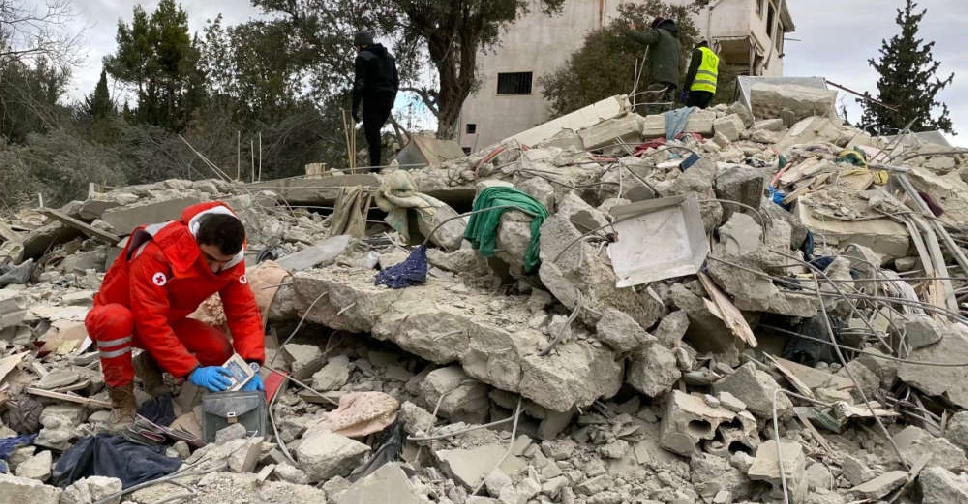
In Beirut, Israeli airstrikes levelled more of the Hezbollah-controlled southern suburbs on Monday, sending clouds of debris billowing over the Lebanese capital.
Efforts to clinch a truce appeared to advance last week when US mediator Amos Hochstein declared significant progress after talks in Beirut before holding meetings in Israel and then returning to Washington.
"We are moving in the direction towards a deal, but there are still some issues to address," Israeli government spokesperson David Mencer said, without elaborating.
In Beirut, Deputy Parliament Speaker Elias Bou Saab said a decisive moment was approaching and expressed cautious optimism. "The balance is slightly tilted towards there being (an agreement), but by a very small degree, because a person like Netanyahu cannot be trusted," he said in a news conference.
The conflict between Israel and Hezbollah spiralled into full-scale war in September when Israel went on the offensive, pounding wide areas of Lebanon with airstrikes and sending troops into the south.
Israel has dealt major blows to Hezbollah, killing its leader Sayyed Hassan Nasrallah and other top commanders and inflicting massive destruction in areas of Lebanon where the group holds sway.
Diplomacy has focused on restoring a ceasefire based on UN Security Council Resolution 1701, which ended a 2006 Hezbollah-Israel war. It requires Hezbollah to pull its fighters back around 30 km (19 miles) from the Israeli border.
Israeli Foreign Minister Gideon Saar said the test for any agreement would be in the enforcement of two main points.
"The first is preventing Hezbollah from moving southward beyond the Litani (River), and the second, preventing Hezbollah from rebuilding its force and rearming in all of Lebanon," Saar said in broadcast remarks to the Israeli parliament.
Far-right National Security Minister Itamar Ben-Gvir said Israel must press on with the war until "absolute victory". Addressing Netanyahu on X, he said "it is not too late to stop this agreement!"
But Agriculture Minister Avi Dichter said Israel should reach an agreement in Lebanon. "If we say 'no' to Hezbollah being south of the Litani, we mean it," he told journalists.
Hezbollah leader Sheikh Naim Qassem said last week that the group had reviewed and given feedback on the US ceasefire proposal, and any truce was now in Israel's hands.
Branded a terrorist group by the United States, the heavily armed Hezbollah has endorsed Parliament Speaker Nabih Berri of the Shi'ite Amal movement to negotiate.
Israel says its aim is to secure the return home of tens of thousands of people evacuated from its north due to rocket attacks by Hezbollah, which opened fire in support of Hamas at the start of the Gaza war in October 2023.
Israel's offensive has forced more than 1 million people from their homes in Lebanon.

 US National Counterterrorism Center director resigns over war in Iran
 France will never take part in operations to unblock Hormuz Strait, says Macron
 Iran rejects de-escalation offers; Israel says it kills Iranian security chief
 Sudan clinic supplies to run out in weeks due to regional conflict, says charity