
Spain's biggest train drivers' union on Wednesday called for a nationwide strike to demand assurances for the profession's safety after one of Europe's biggest train crashes left at least 42 dead and a second derailment killed a driver.
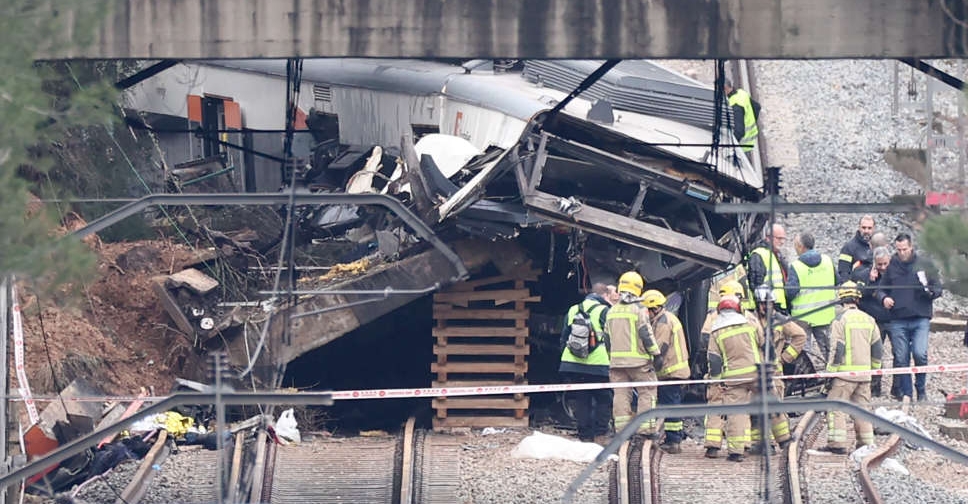
A commuter train derailed on Tuesday after a retaining wall collapsed onto the track during heavy rains near Barcelona, killing the driver and seriously injuring four passengers. A third derailment of a train on Barcelona's regional network, which left no injuries, was caused by a rock falling on the line during the same storm, rail network operator Adif said.
"We are going to demand criminal liability from those responsible for ensuring safety in the railway infrastructure," the train drivers' union SEMAF said in a statement.
Those accidents occurred just two days after the derailment of a high-speed train on Sunday near Adamuz in Cordoba province, about 360 km (223 miles) south of Madrid, which caused a collision with another train that killed 42, including the driver of the oncoming train.
SEMAF had warned Adif in a letter last August of severe wear and tear to the railway track where the two trains collided, according to a copy of the letter seen by Reuters, saying potholes, bumps, and imbalances in overhead power lines were causing frequent breakdowns and damaging the trains on several of the network's high-speed lines.
The strike is motivated by "the emotional state that the train drivers are experiencing right now following the death of two colleagues this week," Transport Minister Oscar Puente told Telecinco.
He said he would try to persuade the drivers to cancel their strike since two of the three derailments were caused by the weather and had nothing to do with the condition of the tracks.
PRISING APART THE CARRIAGE
Rescuers at the site of the Adamuz crash were prising apart the second carriage of the train belonging to state operator Renfe, which contained its cafeteria, to see if any more bodies could be found, the Andalusian regional government said in a statement.
Overnight they had used cranes to remove one of the final carriages of the derailed train run by private consortium Iryo from the scene.
Puente said it was possible that emergency services would find one more victim of the crash.
“We are very near to closing the gap between missing persons and the number of deceased,” he said.
He also said the time between the derailment and the collision was just nine seconds, giving the trains no time to brake. Authorities had previously said the gap was 20 seconds.
Recordings of the phone calls between the driver of the Iryo train and the control centre in Madrid suggest he and passengers travelling in the front five carriages hadn't initially realised there had been a crash with another train, Puente said.
It was only after climbing down from the train to inspect it and seeing the damage to the rear carriages that he made another call to ask for ambulances to be sent.
Adif said on Wednesday it had introduced a further speed limit on the Madrid-Barcelona line after a driver had reported poor conditions on the track in a 78-kilometre stretch.
On Tuesday, it had ordered drivers to limit their speed because of concerns about the state of the track. Its maintenance team had worked overnight to inspect the line and found four points that needed to be repaired, Adif said in a statement.
The accidents are causing chaos for commuters and travellers, who were scrambling for alternatives. Regional trains across Catalonia were suspended on Wednesday to allow for track inspections after the recent storms.
Renfe posted a photo of its President Alvaro Fernandez Heredia using a replacement bus service as he travelled back to Madrid from Adamuz.

 Iran 'would welcome any initiative' to end war, says FM
 Palestinians say Israeli troops kill two children, parents in West Bank
 Israeli foreign minister denies reports of Lebanon talks
 WHO chief says 12 dead in strike on Lebanon's primary healthcare center