

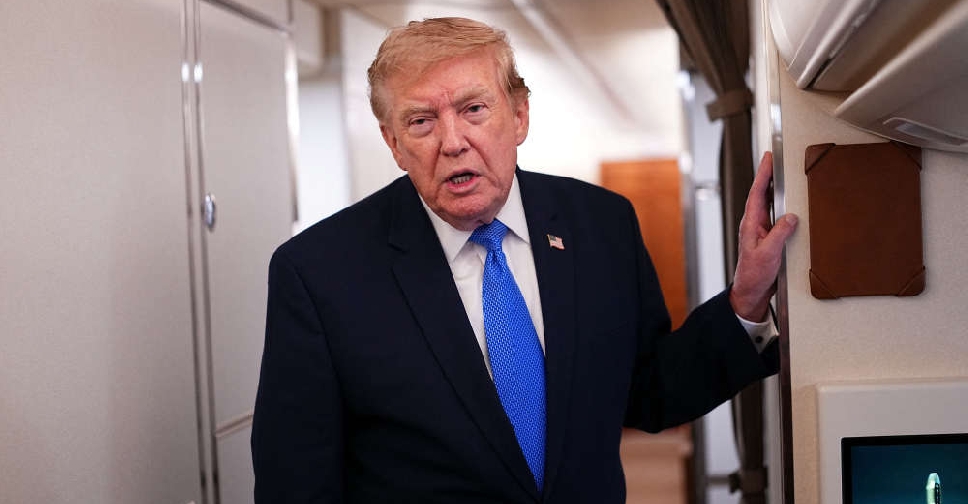
US President Donald Trump said talks with Iran will happen on Monday but declined to set a deadline for an agreement.
Over the weekend, Trump had called off an imminent attack in hopes of quickly reaching a deal to reopen the Strait of Hormuz and resolve the impasse over Tehran's nuclear capabilities.
On his Truth Social platform, Trump added that Iran and other Middle Eastern countries had asked for time to complete a deal that would lead to "the Immediate, Complete and Total" reopening of the strait and "an end to Iran's nuclear threat" but that Tehran must "rapidly make a DEAL."
As he returned to Washington from a weekend in New Jersey, Trump told reporters on Sunday that a negotiation would begin on Monday afternoon but did not provide details of where it would take place or who would be involved.
Asked if there was a deadline for Iran to come to an agreement, Trump declined to answer. "Would I rather make a deal? I'm not looking to kill people because people die, a lot of people die, and we don't want that," Trump said in response.
Eli Cohen, Israel's energy minister and a member of Prime Minister Benjamin Netanyahu's security cabinet, said there was close security and intelligence coordination between Israel and the US on everything happening in the region.
But he added: "With or without an agreement, and regardless of any external commitments, if Iran attempts to renew its nuclear program or advance its ballistic missile industries, we will be there. We will take action, and we will strike."
Trump and Netanyahu met on Tuesday in Washington, with an Israeli official saying they had explored all possible paths to curb Iran's nuclear program, including diplomacy, economic pressure and force. Tehran denies it is seeking a nuclear weapon.
Trump has repeatedly issued threats that he would escalate the war on Iran he launched along with Israel in late February, only to allow more time for talks, which have so far not led to a comprehensive deal.
Trump's apparent de-escalation after days of threats of new attacks from each side was the latest twist in the war. Attacks have spread across the Gulf to the Red Sea and even a Mediterranean facility in Egypt.
Iran has largely closed the Strait of Hormuz, a conduit for 20 per cent of the world's oil and liquefied natural gas before the start of the war, causing energy prices to rise and stoking broader inflation.
The US president has argued that his stated goal of keeping Iran from gaining nuclear weapons justifies higher fuel costs in the near term, but the economic pain has put political pressure on him to find a way to end the conflict.
Oil prices were down more than 4 per cent in early trading on Monday.

 Two die as firefighting helicopters collide in Greece
 Death toll from migrant rush into Ceuta rises to 72
 At least 14 killed in blast outside Pakistan police station
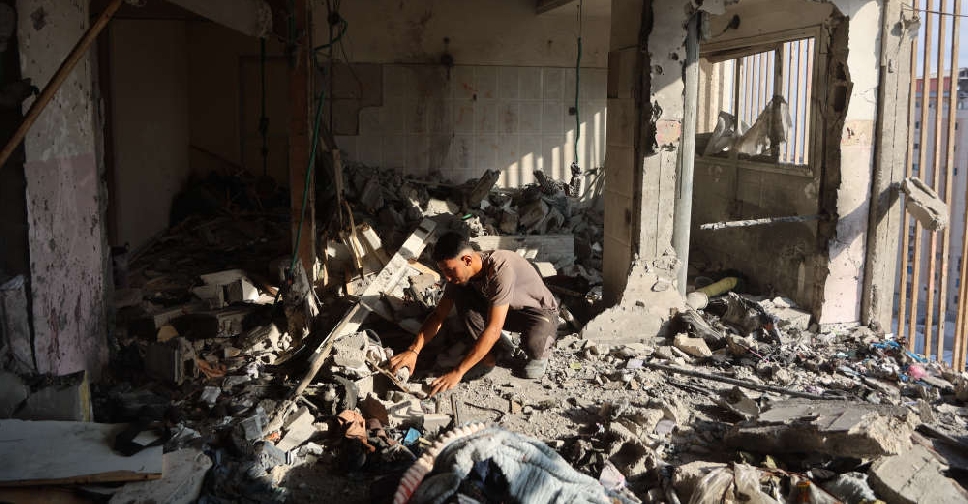 Israeli strikes kill 15 in Gaza, minister says no deal to halt attacks