
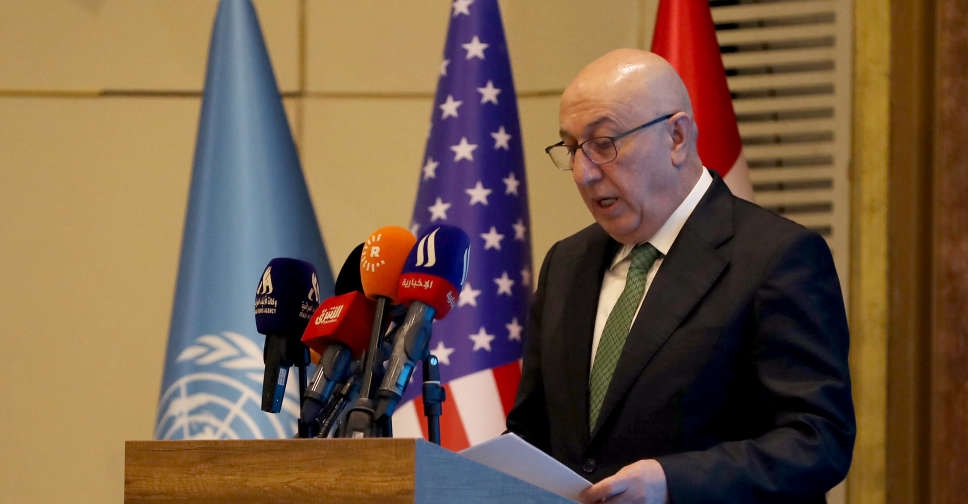
The Iraqi parliament on Saturday elected Kurdish politician Nizar Amedi as the country's new president, a largely ceremonial role, following a parliamentary election last November.
Amedi, 58, is a former environment minister and has headed the political office of the Patriotic Union of Kurdistan (PUK) in Baghdad since 2024.
Iraq is now due to choose a prime minister, a closely-watched and sensitive pick.
US President Donald Trump threatened in January to withdraw Washington's support for Iraq, a major oil producer, if former Prime Minister Nouri al-Maliki was designated to form a cabinet.
An alliance of Shi'ite political blocs holding a parliamentary majority has nominated Iran-backed Maliki, alarming Washington, which along with Israel waged a six-week war with Iran until a ceasefire was announced on Tuesday.
Senior US and Iranian officials were meeting in Islamabad on Saturday in the highest-level talks between Washington and Tehran in half a century in an effort to end the war.
In Iraq, which has long trodden a tightrope between Iran and the US, its closest allies, the prime minister wields significant power.
Under Iraq's sectarian power-sharing system, the prime minister must be a Shi'ite Muslim, the parliamentary speaker a Sunni Muslim, and the president a Kurd.

 Saudi Arabia says danger passed in six cities, including Yanbu
 Bahrain, Kuwait, Jordan offer condolences over martyrdom of two UAE servicemen
 King Charles to host AI executives as threat fears mount
 Amazon pauses operations with 21 Air after Miami cargo plane crash