

North Korea said on Friday it had tested a new solid-fuel intercontinental ballistic missile (ICBM), the Hwasong-18, to "radically promote" the country's nuclear counterattack capability, state media reported.
Leader Kim Jong Un guided the test, and warned it would make enemies "experience a clearer security crisis, and constantly strike extreme uneasiness and horror into them by taking fatal and offensive counter-actions until they abandon their senseless thinking and reckless acts".
North Korea has criticised recent US-South Korean joint military exercises as escalating tensions, and has stepped up weapons tests in recent months.
South Korea's defence ministry said North Korea was still developing the weapon, and that it needed more time and effort to master the technology, indicating that Pyongyang might carry out more tests.
North Korean state media outlet KCNA released photos of Kim watching the launch, accompanied by his wife, sister and daughter, and the missile covered in camouflage nets on a mobile launcher.
"The development of the new-type ICBM Hwasongpho-18 will extensively reform the strategic deterrence components of the DPRK, radically promote the effectiveness of its nuclear counterattack posture and bring about a change in the practicality of its offensive military strategy," KCNA said, using the initials of its official name.
"Pho" means "artillery" in Korean.
Analysts said it is the North's first use of solid propellants in an intermediate-range or intercontinental ballistic missile.
Developing a solid-fuel ICBM has long been seen as a key goal for North Korea, as it could help the North deploy missiles faster during a war.
MORE TESTS?
Most of the country's largest ballistic missiles use liquid fuel, which requires them to be loaded with propellant at their launch site - a time-consuming and dangerous process.
"For any country that operates large-scale, missile based nuclear forces, solid-propellant missiles are incredibly desirable capability because they don't need to be fuelled immediately prior to use," said Ankit Panda, a senior fellow at the US-based Carnegie Endowment for International Peace. "These capabilities are much more responsive in a time of crisis."
North Korea will most keep some liquid-fuel systems, complicating the calculations of the U.S. and its allies during a conflict, Panda said.
Vann Van Diepen, a former US government weapons expert who now works with the 38 North project, said solid-fuel missiles are easier and safer to operate, and require less logistical support - making them harder to detect and more survivable than liquids.
North Korea first displayed what could be a new solid-fuel ICBM during a military parade in February after testing a high-thrust solid-fuel engine in December.
Analysts said the US could determine between a solid- or liquid-fuelled launch with early warning satellites that can detect differences in the infrared data produced by various missile types.
The latest launch came days after Kim called for strengthening war deterrence in a "more practical and offensive" manner to counter what North Korea called moves of aggression by the United States.
The missile, fired from near Pyongyang, flew about 1,000 km before landing in waters east of North Korea, officials said. North Korea said the test posed no threats to its neighbouring countries.


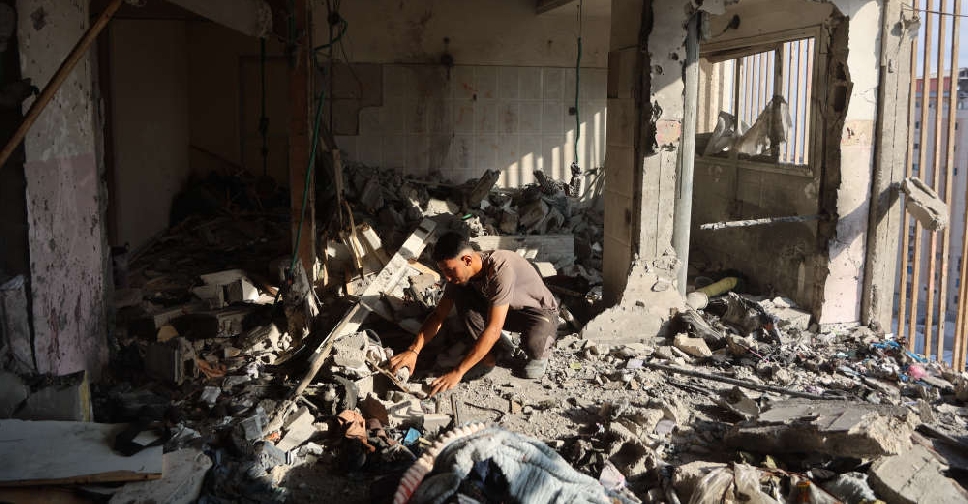 Israeli strikes kill 15 in Gaza, minister says no deal to halt attacks
 Death toll from migrant rush into Ceuta rises to 72
 Ukrainian drones kill eight in Russia
 Two helicopters collide as Greece battles wildfires